Obsessive compulsive disorder in children often hides in plain sight. A parent sees a child who needs to redo homework because the letters do not feel right, or a second grader who takes twenty minutes to wash hands after touching a doorknob. To an outsider, it can look like stubbornness, personality, or a quirk. Inside, it feels urgent and commanding. The child is driven to neutralize a wave of dread, or to make an internal alarm finally quiet.
When therapy maps to how OCD actually works in a child’s brain and life, symptoms shift. The core pieces are exposure and response prevention, play based methods that make exposures doable, and parent support that reduces family accommodation. Children move best when the path is concrete, compassionate, and consistent.
What OCD Looks Like in Children
OCD is not only about germs or straight lines. In children you might see contamination fears, perfectionism that makes schoolwork a battlefield, intrusive harm thoughts, religious scrupulosity, fear of bad luck, sensorimotor obsessions like swallowing or blinking, and needing things to feel just right. Compulsions follow, sometimes obvious like washing and checking, other times quiet and internal like mental counting, repeating phrases, praying in a set way, or asking for reassurance until everyone is exhausted.
Kids rarely use the word obsession. They say things like, my brain says I have to, or I get a yucky feeling that will not stop, or it will be my fault if I do not. Unlike simple habits, compulsions temporarily relieve anxiety, then cement the cycle. Families often get pulled in through accommodation. Parents open doors, answer the same question again and again, wait while a child repeats a step, or avoid triggers to keep the peace. Accommodation makes sense in the moment, yet it typically makes OCD stronger.
How OCD Works in a Child’s Mind
It helps to give kids a simple map. I describe OCD as a sticky alarm system. It triggers false alarms that feel real. Obsessions are the alarms, compulsions are the things we do to try to make the alarm stop. The more we do rituals, the more we teach the alarm that it picked a good target, so it will go off again next time.
The treatment logic follows. We teach the brain that the alarm is false by approaching triggers and then not doing the ritual. The anxiety rises, peaks, and falls on its own. Over time, the brain relearns. Therapy often borrows from the inhibitory learning model: we create new learning that coexists with, and ultimately weakens, the old fear. This looks different in a seven year old than in a teen. With younger kids, we lean into play, stories, and creative tools to make exposures both doable and meaningful.
Assessment Before Action
A good evaluation protects time and trust. I want to know onset and course, what obsessions and compulsions look like across home and school, family history, and medical factors. I ask carefully about safety, self harm, eating patterns, tics, sleep, and somatic symptoms. Teachers can help identify avoidances that have become part of the classroom routine, like only using one pencil or skipping the bathroom all day.
Differential diagnosis matters. Anxiety disorders, autism spectrum profiles, ADHD, tic disorders, and trauma related symptoms can overlap with OCD, but the treatment sequence changes depending on what is primary. For example, a child might line up toys because of a love of order tied to autism, not because their mind predicts catastrophe. Or a child with a trauma history may perform checking behaviors that link to a specific event, which calls for trauma therapy. If tics or PANS/PANDAS are suspected, we coordinate with pediatrics and neurology. In my experience, parents appreciate when we say, we are not going to force a square peg into a round hole. We tailor.
As a general rule, when OCD is primary, exposure and response prevention is the first line. When trauma is primary, we address safety and stabilization and add trauma therapy. EMDR therapy can be valuable for discrete traumatic events, and sometimes for the trauma of living with severe OCD. We use judgment about timing. If a child washes to prevent family harm from imaginary contamination, EMDR is not a fit for that target. If the child is assaulted and now has nightmares and hypervigilance, EMDR may help once we anchor daily routines and support.
Neurodivergent therapy principles are often essential. Many kids with OCD also have ADHD or autism traits. We adjust pacing, give more structure, build visual supports, reduce language load, and expect uneven progress. We do not punish stimming or innocuous rituals. We focus on compulsions that lock life up, and we respect sensory profiles while we still nudge growth.
Exposure and Response Prevention, Sized for Children
ERP is simple to describe and hard to do without scaffolding. You face a trigger and you resist the ritual. Anxiety rises, then falls. You do it again. Over multiple trials, the urge loses its grip.
For children, the art is in the translation. A therapy room can feel artificial, so we often start in office with props and practiced language, then move to the real world. If contamination fears dominate, we might build a graduated plan that starts with a dot of washable marker called a germ, touching it without washing, and rating the urge on a 0 to 10 scale. We can name the OCD voice to create a little distance, and we might make it playful. The parent can role model by touching the marker, smiling, and waiting with the child while the feeling peaks. Later we take it to the playground or school bathroom.
For harm obsessions, we first normalize intrusive thoughts. Almost everyone has a flash of what if I dropped this baby or what if I swerve into traffic. OCD grabs those thoughts and insists they mean something. With kids, we might invent silly thought experiments: thinking about flying does not lift you off the couch, thinking about fire does not char your toast. Exposures include writing and reading brief scripts about the feared event without neutralizing, or holding a safe kitchen knife while cooking with a parent present, and noticing urges to seek reassurance without acting on them.
Perfectionism and just right OCD can derail academics. We might time box assignments, prohibit erasing on the first draft, or accept three crossed out words per line. The exposure is to hand in imperfect work and learn that nothing catastrophic happens. Teachers often need to coordinate to prevent well meaning accommodation from undoing the progress.
Religious scrupulosity requires respect for values and collaboration with a faith leader if the family wants it. Many traditions can help draw a line between devotion and compulsion. Exposures might involve praying once without repeating until it feels perfect, or tolerating uncertainty about whether a sin was confessed correctly, chosen with pastoral guidance.
Sensorimotor obsessions call for a slightly different approach. The goal is not to control blinking or breathing, but to let awareness rise and fall without trying to fix it. Exposures target monitoring and checking, not the bodily act itself. This is where kids learn to carry a sensation without doing anything about it.
Building a Child Friendly Exposure Plan
A plan earns buy in when it makes sense to the child and the parent, and when it fits daily life. We design items that are specific and measurable. If a child fears sticky stuff, we define the sticky and the time we will wait before washing. We build in rewards that are immediate and meaningful. We also plan for rituals that happen inside the child’s head. If the compulsion is mental prayer, the response prevention is to let the thought sit without replacing it.
Here is a brief way I coach families to build their first ladder.
- List triggers, rated from 0 to 10 on how hard they feel, then pick a low to medium item to start. Define the exposure in concrete, observable terms, including how long the child will sit with the urge or what they will refrain from doing. Decide the response prevention rules ahead of time, including what parents will and will not say or do. Practice the exposure in session to model and coach, then assign short, daily at home repeats. Review the data each week, adjust difficulty, and move up only when the urge drops in a predictable curve.
Kids often want to skip from 3 to 9. I let them shoot their shot once to learn the curve, then we return to shaping. Hitting a hard exposure and feeling swamped can make OCD flare. The right dose matters.
Using Play as a Bridge, Not a Distraction
Play is not a trick to sneak therapy past a child. It is a language. For a nine year old, putting googly eyes on a bottle of hand soap and calling it Mr. Bossy Germ gives just enough emotional distance to argue back. For a six year old, a puppet can model sitting with an urge and breathing while it passes. Board games and art projects turn repetition into a less sterile task. If a child loves sports, we might frame exposures like practice reps. Ten free throws a day, not waiting for the big game to get better.
I use stories to carry the logic. A short hero tale, where the hero learns to let the alarm ring without pressing a button, lands more deeply than a lecture. We also use small, honest celebrations. When a child touches a feared object and waits, I name exactly what they did. You touched the sink and you let the yucky feeling climb, you watched it peak, and you did not wash for five minutes. That is how brains change.
Play does not mean we sugar coat. We name discomfort. We keep it brief, we return tomorrow, and we pair effort with something that feels good. Token systems, points toward a special activity, or a simple chart with check marks all work if they are consistent and live close to the exposure.
Parent Support: Reducing Accommodation Without Breaking Trust
Parent behavior can unintentionally feed OCD. When a child asks, did I touch something dirty, and a parent answers for the twentieth time, the parent’s relief pairs with the child’s relief. The cycle tightens. We do not blame parents for trying to help. We give them scripts and a plan.
In the first month, I often suggest parents focus on a narrow set of changes.
- Choose one or two accommodations to reduce, write down the new rule, and share it with the child in calm language. Replace reassurance with empathy plus a prompt to use skills, for example, I know this is hard, what does your plan say. Set a daily, short exposure time where you will coach without arguing or bargaining, and end on time. Agree on a private cue for you to stop engaging in rituals, like touching a wrist, and follow it consistently. Pair effort with attention and micro rewards, and let OCD driven demands pass without extra attention.
Parents also need a place to put their own distress. Watching your child suffer presses every button you have. Couples therapy can help parents align, https://telegra.ph/Play-Trust-Grow-The-Power-of-Play-in-Child-Therapy-03-25 especially if one parent tends to accommodate while the other pushes hard. We focus on shared goals and consistent messaging, not on winning arguments about whose approach is right.
Working With Schools
OCD shows up in classrooms as perfectionism, slowness, avoidance of bathrooms, ritualized note taking, constant question asking, and social withdrawal. Educators usually want to help, though they may not know what to avoid. For instance, allowing unlimited do overs feeds just right obsessions. Answering every reassurance question trains the cycle.
A simple, written plan helps. This might be a 504 accommodation or part of an IEP if other needs are present. We outline where exposures can happen safely, how the teacher should respond to reassurance seeking, bathroom access rules, and how to handle late or imperfect work during the early phases of treatment. A point person at school can email brief data so that therapy stays linked to real life.
Medication and Team Care
Many children do well with therapy alone. For moderate to severe OCD, or when depression rides along, a selective serotonin reuptake inhibitor can lower the waterline enough to make ERP possible. Pediatricians and child psychiatrists usually start with fluoxetine, sertraline, fluvoxamine, or escitalopram, and titrate up slowly. Expect several weeks before benefits are clear. Medicine does not replace exposures. It opens the door.
Some kids have co occurring tics. Guanfacine or clonidine can help attention and tics, and sometimes reduce anxiety. If there is any sudden change in symptoms after infection, that is a pediatric issue to address quickly, not a counseling footnote. The best outcomes come when professionals talk to each other. I ask parents for permission to coordinate with the prescriber and the school so we spend less time reinventing wheels.
When Trauma Therapy and EMDR Fit
Children can have both OCD and trauma. In that case we do not force a single model to do it all. If a child has flashbacks, avoidance rooted in a real event, and hyperarousal, trauma therapy deserves time and care. EMDR therapy can be effective for single incident trauma and for cumulative experiences. I stabilize first, build coping skills, and make sure OCD is not spiraling as we touch trauma memories. Sometimes we sequence work, sometimes we run parallel tracks with clear boundaries.
What we avoid is using trauma protocols to process intrusive harm thoughts that have no traumatic origin and are classic OCD content. Those respond best to ERP. An honest conversation with the family about what each method targets prevents frustration.
Telehealth, Home Practice, and Real Life
Many exposures live at home. Telehealth can be an advantage because I can coach in the kitchen while a child holds a sticky spoon, or in the hallway outside the school bathroom. The logistics matter. Sessions need strong internet, a quiet space, and a parent close enough to support but not to perform rituals on demand. Shorter, more frequent check ins sometimes beat long weekly sessions, especially early on when we are shaping behavior daily.
Home practice only sticks when it is scheduled. If a family says we will do exposures when we have time, OCD wins. I ask for ten to fifteen minutes at a predictable time, with a visible plan and a simple record of what happened. We treat it like brushing teeth. Ordinary, boring, and non negotiable.
Handling Taboo Obsessions and Risk
Some content scares parents into silence. Children can have intrusive sexual thoughts, harm images about family members, or blasphemous ideas. The thoughts are ego dystonic, meaning they clash with the child’s values. The risk is not the same as intent. Clinicians should assess safety carefully and compassionately, then teach families the difference between an intrusive thought and a plan. Proper exposures involve writing or saying the thought in neutral form, and preventing the mental rituals that try to neutralize it. Shame makes OCD thrive. Sunlight and accuracy weaken it.
Suicidal intrusive thoughts can look like what if I jump off the balcony, which is different from a child saying they want to die. We assess directly, partner with parents, and keep the exposure frame intact where appropriate. Crisis plans belong when risk is real. Otherwise we avoid turning OCD content into emergencies it does not warrant.
Progress, Setbacks, and What Success Looks Like
Tracking matters. We do not expect a smooth line. I ask for a one sentence win from the week, a one sentence stuck point, and a number that captures overall distress. We plot exposures, watch the urge curves, and celebrate function returning. A child who could not touch the playground now eats lunch with classmates. A teen who spent ninety minutes getting ready now leaves the house in thirty. Those are huge shifts.
Relapse prevention is not a heroic final session. It is a plan on paper that names early warning signs like rising reassurance questions or new avoidances, and it names the first three exposures we will run if symptoms creep up. Families often keep a quarterly tune up session on the calendar for six to twelve months. It is less about crisis and more about maintenance.
How This Work Intersects With Other Therapies
Parents sometimes ask if they should pause everything else. Often we can keep supportive therapies running, especially if the therapist understands ERP or is willing to coordinate. If a child is in speech therapy or occupational therapy, we ask those providers to help in small ways, like tolerating a little mess during a sensory task or resisting a perfection loop in handwriting. If the family is in couples therapy, the focus can shift toward alignment on OCD responses and shared stress management.
When ADHD is present, we may need stimulant medication or behavioral supports so that the child can follow the steps of an exposure and hold the line on rituals. When autism traits are part of the picture, neurodivergent therapy perspectives help us figure out whether a routine is soothing or compulsive, and how to build flexibility skill by skill without erasing identity.
A Day in Practice: A Brief Anecdote
A third grader I will call Maya had developed contamination fears after a bout of stomach flu. She stopped using the school bathroom, then stopped using the bathroom at home unless her mother stood outside the door. By the time we met, her stomach hurt daily and she cried before school.

We named her OCD voice The Bossy Bully. We built a ladder that started with touching the bathroom sink and rating the urge to wash. In session, she touched the sink for three seconds, then five, then ten, then put a sticker on a chart each time she waited thirty seconds before washing. Her mother learned to say, I believe you feel scared, and I also believe you can handle this, and then to point to the plan instead of answering reassurance questions.
At home, they set a five minute daily exposure time after dinner. By week two, Maya used the bathroom without her mother outside for one minute. We celebrated a very boring minute. By week four, she used the school bathroom twice a week with a timed handwash and no parent call. She still had spikes, like when a classmate vomited on the playground. We used that day to run a planned exposure instead of scrambling to put out a fire. Six months later, her chart lived in a drawer. The skill did not.
What Parents Can Expect
OCD therapy with children is active. You will learn scripts and responses, and you will probably feel worse before you feel better because the family stops avoiding triggers. That is not a failure. It is the work. The pace should feel steady, not punishing. A typical course runs from eight to twenty sessions, sometimes longer when symptoms are severe or when there are co occurring conditions. Booster sessions are common.
If a therapist uses only insight or relaxation for OCD, and exposures never appear, ask questions. Relaxation and mindfulness can help with distress tolerance, but without response prevention they rarely move OCD. If a therapist proposes trauma processing for intrusive thoughts with no trauma origin, ask about ERP. Likewise, if a therapist ignores a trauma history in a child with clear PTSD, ask about sequencing care. Good therapy makes room for the whole child.
Final Thought
Children do not choose OCD, yet they can learn to outgrow its grip. Exposure and response prevention, sized right and supported by play and parent coaching, gives them the tools. Families who commit to small, repeated steps see routines return first, then confidence, then joy. The process is not magic. It is ordinary work done with care, and that is exactly why it changes lives.
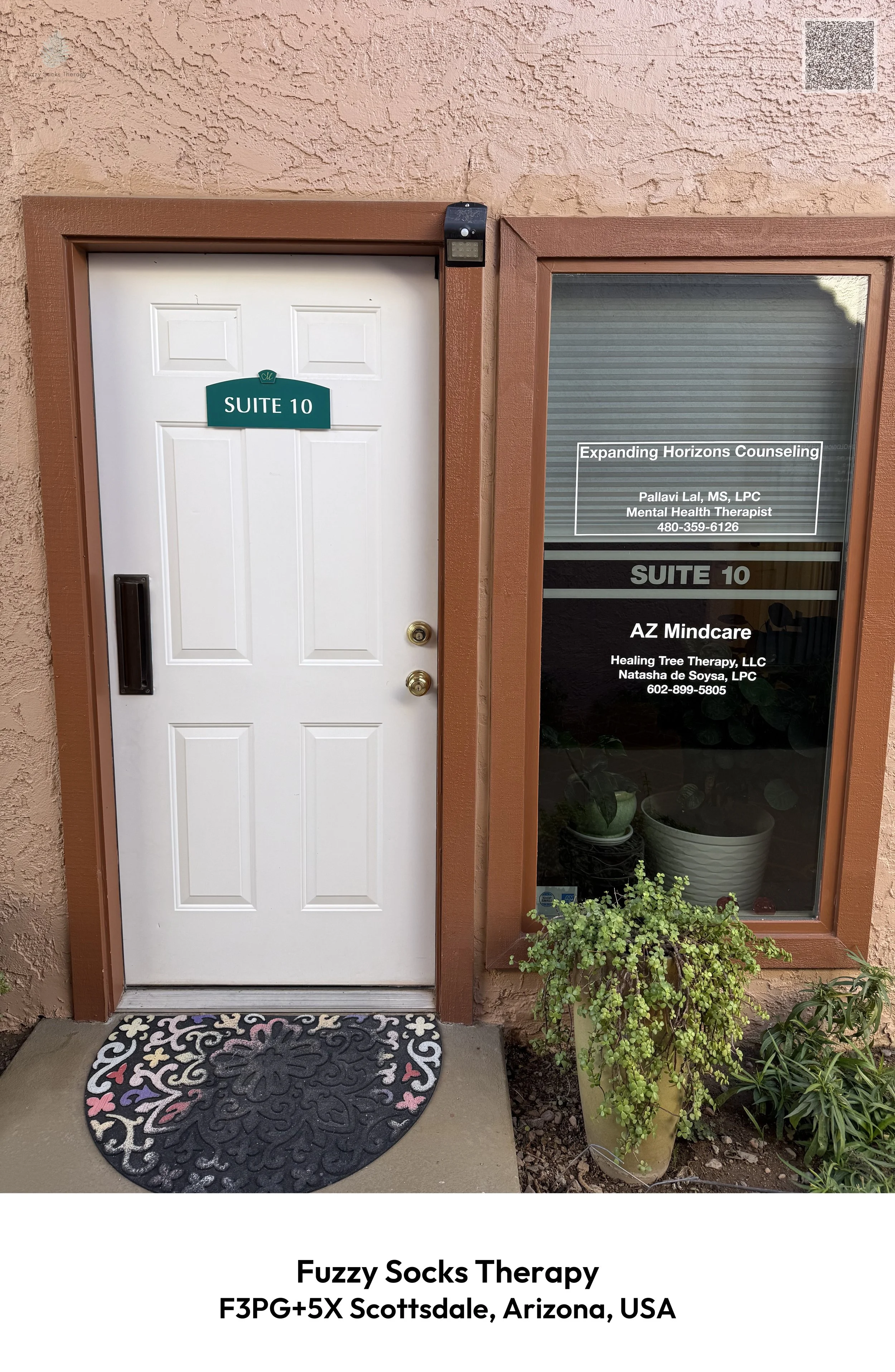
Address: 3295 N. Drinkwater Blvd., Suite 10, Scottsdale, AZ 85251
Phone: (720) 378-8454
Website: https://www.fuzzysockstherapy.com/
Email: [email protected]
Hours:
Monday: 9:00 AM - 5:00 PM
Tuesday: 9:00 AM - 5:00 PM
Wednesday: 9:00 AM - 5:00 PM
Thursday: 9:00 AM - 5:00 PM
Friday: 9:00 AM - 5:00 PM
Saturday: Closed
Sunday: Closed
Open-location code (plus code): F3PG+5X Scottsdale, Arizona, USA
Map/listing URL: https://maps.app.goo.gl/cqhwvXU4UMg6QL1YA
Embed iframe:
The practice offers in-person therapy in Scottsdale along with online sessions for clients in Arizona, Colorado, and Florida.
Clients can explore services such as trauma therapy, EMDR therapy, Deep Brain Reorienting Therapy, neurodivergent therapy, child therapy, couples therapy, discernment counseling, and parenting intensives.
Fuzzy Socks Therapy is especially relevant for people navigating trauma, dysfunctional family dynamics, ADHD, autism, relationship conflict, and emotional overwhelm.
The website presents a direct, practical therapy style focused on real tools and meaningful change rather than vague advice.
Scottsdale clients looking for trauma-informed psychotherapy can find support that combines deeper healing work with concrete skill building.
The practice also offers help for adult children of dysfunctional families, couples on the brink, and neurodivergent kids, teens, and adults.
To get started, call (720) 378-8454 or visit https://www.fuzzysockstherapy.com/ to book a free consultation.
A public Google Maps listing is also available for Scottsdale location reference alongside the official website.
Popular Questions About Fuzzy Socks Therapy
What does Fuzzy Socks Therapy help with?
Fuzzy Socks Therapy helps with trauma, dysfunctional family patterns, neurodivergence, relationship conflict, emotional overwhelm, and related challenges for individuals, couples, and families.
Is Fuzzy Socks Therapy located in Scottsdale, AZ?
Yes. The official website lists the office at 3295 N. Drinkwater Blvd., Suite 10, Scottsdale, AZ 85251.
Does Fuzzy Socks Therapy offer in-person and online sessions?
Yes. The official site says the practice offers in-person therapy in Scottsdale and online therapy in Arizona, Colorado, and Florida.
What therapy approaches are listed on the website?
The website highlights EMDR therapy, Deep Brain Reorienting Therapy, discernment counseling, play therapy, Dialectical Behavior Therapy, Emotionally Focused Therapy, and practical trauma-informed skill building.
Who provides therapy at Fuzzy Socks Therapy?
The official website identifies the therapist as Lianna Purjes.
Does the practice offer couples counseling?
Yes. The website includes couples therapy, couples intensives, and discernment counseling for couples deciding whether to stay together or separate.
Does the practice work with children and adolescents?
Yes. The site says the practice offers child therapy and support for children, adolescents, and their families.
How can I contact Fuzzy Socks Therapy?
Phone: (720) 378-8454
Email: [email protected]
Website: https://www.fuzzysockstherapy.com/
Landmarks Near Scottsdale, AZ
Drinkwater Boulevard is the clearest local reference point for this office and helps nearby clients place the practice in Scottsdale. Visit https://www.fuzzysockstherapy.com/ for service details.
Old Town Scottsdale is a familiar city landmark and a practical reference for people searching for therapy near central Scottsdale. Call (720) 378-8454 to learn more.
Scottsdale Civic Center is another recognizable local landmark that helps define the surrounding area for nearby professional services. The official website has current contact details.
Scottsdale Stadium is a well-known destination in the city and a useful point of reference for local users. Fuzzy Socks Therapy offers both in-person and online sessions.
Indian School Road is a major corridor that helps many residents orient themselves in Scottsdale. More information is available at https://www.fuzzysockstherapy.com/.
Fashion Square and the surrounding central Scottsdale area are widely recognized by local residents and visitors alike. Reach out through the website to book a free consultation.
Downtown Scottsdale is a strong local search reference for people seeking counseling and psychotherapy services in the area. The practice serves Scottsdale in person and multiple states online.
Scottsdale Road is another major route that helps define the broader service area for clients traveling from nearby neighborhoods. The practice supports individuals, couples, and families.
The Scottsdale arts and civic district is a useful area reference for those familiar with the city center. Visit the site to review specialties and next steps.
Central Scottsdale commuter corridors make this practice relevant for nearby residents who want in-person therapy, while online sessions add flexibility for clients in Arizona, Colorado, and Florida.